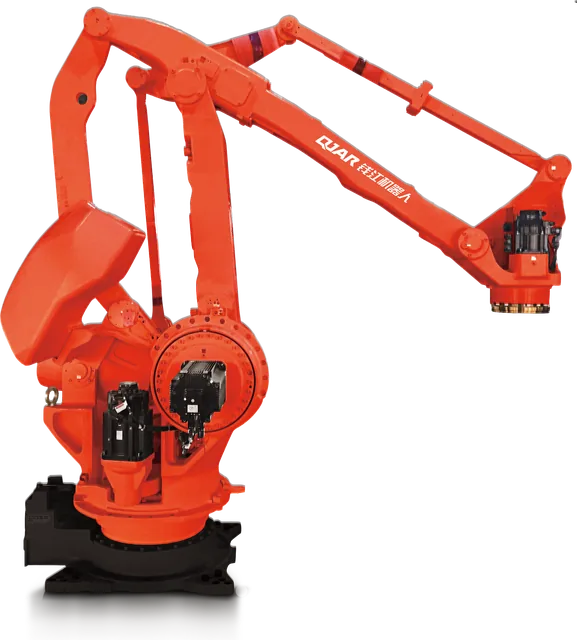
The question "how much does an industrial robot cost" has an honest and not very satisfying answer: it depends on what comes with the arm. Nobody buys a robot to leave it standing on the shop floor. What is bought is a cell that delivers welded parts, built pallets or tended machines, with a defined cycle and safety. That cell is what has a price.
This article has no price table, because any figure outside the context of a project would be wrong. It shows what makes up the price, what keeps costing after the purchase and how to calculate the return with your plant's numbers.
Why the price of the arm says little
Two projects with the same robot can have very different investments. A positioner, a more elaborate fixture, a second loading station or a more complete safety scope weigh more in the total than the difference between two arm models.
Comparing proposals, therefore, does not start with the robot. It starts with the scope: what each supplier includes, what is left to the customer and what result is guaranteed.
The ten blocks of the investment
| Block | What it includes | What makes it vary |
|---|---|---|
| 1. Robot and controller | Arm, control cabinet, teach pendant | Payload and reach class |
| 2. Tool | Gripper, torch, spray gun or spot gun | Mass, number of functions, automatic tool change |
| 3. Process equipment | Welding power source, positioner, track, painting system | Process and part size |
| 4. Fixtures and feeding | Jigs, conveyors, magazines | Part variety and tolerances |
| 5. Safety | Guards, interlocks, light curtains, scanners, design | Layout, access points and risk assessment |
| 6. Engineering and integration | Design, simulation, programming, commissioning | Complexity and number of different parts |
| 7. Installation | Base, electrical, compressed air, gases, extraction | Site conditions |
| 8. Training and documentation | Training, manuals in Portuguese | Team size and shifts |
| 9. Import and taxes | Freight, insurance and taxes when the equipment is imported | Origin and tax classification |
| 10. Start-up reserve | Initial spare parts, support during the production ramp | Criticality of the cell |
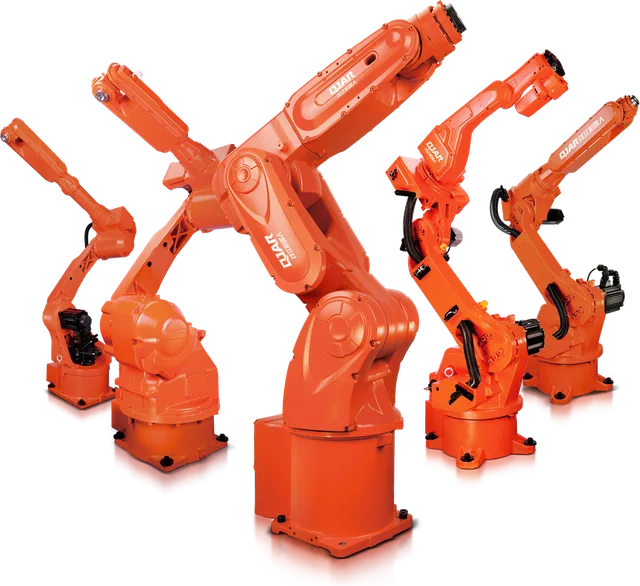
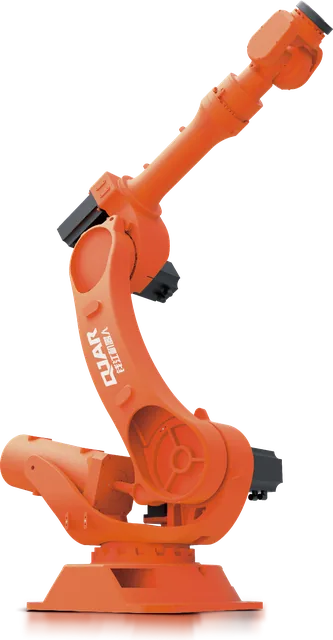
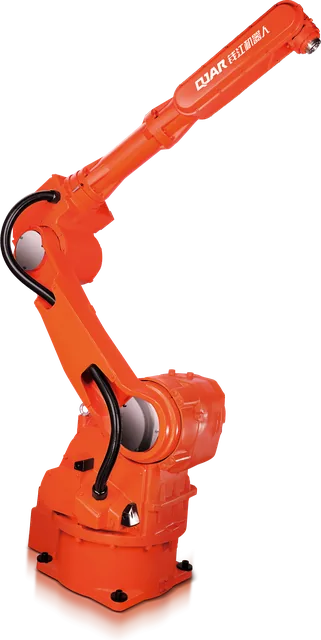
In block 1, the variation comes from the robot class. The QJAR line goes from 4 kg payload with 1,410.5 mm reach up to 800 kg with 3,159 mm. How to choose the right class is in the industrial robot guide.
Block 5 is not optional. Brazil's NR-12 states that guards, devices and safety systems are integral parts of the machine. What the regulation asks for is in NR-12 for robot cells.
The cost after purchase
The initial investment is the visible part. Total cost of ownership includes what the cell consumes over the years:
- electricity and utilities;
- process consumables, such as wire, gas, nozzles and suction cups;
- preventive maintenance and wear parts;
- programming of new parts and process adjustments;
- hours of those who operate, feed and supervise the cell;
- stoppages, which cost more when the cell is the bottleneck of the line.
Nearby support and parts available in the country weigh on this calculation as much as the purchase price. It is one of the criteria in the article on how to choose a robot integrator.
How to calculate the return
The formula
Simple payback (years) = total investment ÷ net annual gain
Net annual gain is the sum of the gains minus the annual costs of running the cell.
Gains that count:
- labour reallocated, per shift, including social charges;
- additional saleable output, when the cell unlocks a bottleneck;
- less scrap and rework;
- savings in consumables thanks to a more stable process;
- fewer absences in tasks with repetitive strain.
Costs that count: the items in the previous list, from energy consumption to maintenance.
An example with index numbers
The values below are indices, chosen to show how the calculation works. They are not market values, so payback is also shown as an index: one shift equals 100.
| One shift | Two shifts | |
|---|---|---|
| Total investment | 100 | 100 |
| Gross annual gain | 55 | 105 |
| Annual operating cost | 12 | 20 |
| Net annual gain | 43 | 85 |
| Simple payback (index) | 100 | 51 |
The investment is the same in both columns. What changes is how many hours per year the cell works: in this example, the second shift cuts payback to about half. The period in years only comes from the real figures of your project.
Beyond payback
Simple payback is easy to explain and ignores what happens after the investment has paid for itself. For a board-level decision, add net present value and internal rate of return, considering the service life of the equipment and depreciation, which should be simulated with your accountants.
What moves the return most
- Number of shifts. More hours spread the same investment.
- Cell utilization. A cell waiting for parts generates no gain. Part supply has to keep up with the robot.
- Part variety and changeover time. Families of similar parts reuse fixtures and programs.
- Upstream quality. A part out of tolerance becomes a stoppage and rework, not production.
- A well-cut scope. The cell that solves the main bottleneck pays back before the one that tries to solve everything.
In processes such as robotic welding, the gain comes from arc-on time. In palletizing, it comes from line rate and the end of manual effort, as shown in the palletizing robot guide. In both, the logic of the calculation is the same.
Three common mistakes in the calculation
- Counting only labour and leaving out scrap, rework and additional output.
- Using the price of the arm as if it were the total investment.
- Calculating with the cell busy all the time, without considering part change, feeding and maintenance.
Financing and taxes in Brazil
Two mechanisms usually come up. Rules change, and each case has to be confirmed with those responsible for it.
- BNDES Finame. A credit line of the Brazilian development bank that finances, through accredited financial institutions, the purchase of machinery and equipment. Under the bank's rule, the goods must be new, made in Brazil and accredited by BNDES. Whether a cell assembled in Brazil with an imported robot qualifies depends on how it is supplied.
- Ex-tarifário. A regime that temporarily reduces the import duty rate for capital goods when there is no equivalent national production, governed by Gecex Resolution No. 512/2023, as amended in 2025 and 2026. The rule excludes used goods and integrated systems, which calls for attention when the request involves a complete cell.
What about a used robot?
It comes up in every price search. Before comparing, check four points: the age of the controller and parts availability, whether the safety functions meet the project, whether manuals exist in Portuguese and who is responsible for integration. The cost of retrofitting and maintaining goes into the same return calculation. And the Ex-tarifário regime, as seen above, does not apply to used goods.
An expanding market
Deciding to automate with robots is no longer the exception. According to the International Federation of Robotics, Brazil installed almost 4,300 industrial robots in 2025, up 38% on the previous year. Worldwide there were more than 600,000 installations and the operational stock reached 5 million units.
How to request a quote you can compare
Ask each proposal to state explicitly:
- the scope of each of the ten blocks, including what is left to the customer;
- the cycle time and output per shift assumed;
- the safety scope and the documentation delivered;
- what is included in training and in start-up support;
- the terms of support and parts supply.
If the doubt is still between a guarded cell and an application with people nearby, the comparison between collaborative and industrial robots shows how each path changes the calculation.
Frequently asked questions
How much does an industrial robot cost?
There is no single figure. The price depends on the payload and reach class of the robot, the tool, the process equipment, safety and integration engineering. The arm is only one of about ten lines of the investment, and a reliable quote starts from the part, the cycle and the layout.
How long does an industrial robot take to pay for itself?
It depends mainly on the number of shifts, cell utilization and part variety. The calculation is total investment divided by net annual gain. With the same investment, more operating hours per year increase the gain and shorten the payback period.
What is payback in an automation project?
It is the time needed for the accumulated net gain to equal the investment. Simple payback is total investment divided by net annual gain. For board-level decisions, net present value and internal rate of return complete the analysis.
Is there an import duty reduction for robots in Brazil?
There is the Ex-tarifário regime, which temporarily reduces the import duty rate for capital goods with no equivalent national production. It does not apply to used goods. Whether the equipment in your project qualifies must be checked with the importer and the customs broker.
Can an industrial robot be financed in Brazil?
There are credit lines for machinery and equipment. BNDES Finame finances goods that are new, made in Brazil and accredited by the bank, through financial institutions. Whether a cell with an imported robot qualifies depends on how it is supplied and must be confirmed with the financial agent.
Talk to BR Robotics
BR Robotics integrates QJAR robots in Brazil. Send the process, the part and the target cycle time: the reply comes with the recommended model, the cell layout and the quote. With those three items, the return can be calculated with your plant's numbers. Talk to BR Robotics or see the robot line.
Sources
- Brazilian Ministry of Development, Industry, Trade and Services, FAQ on the Ex-tarifário regime (in Portuguese)
- BNDES Finame, financing of machinery and equipment (in Portuguese)
- IFR, World Robotics 2026: installations worldwide and in Brazil
- NR-12, Safety at Work in Machinery and Equipment, item 12.5.16 (in Portuguese)
- EVST Brasil, QJAR line datasheets