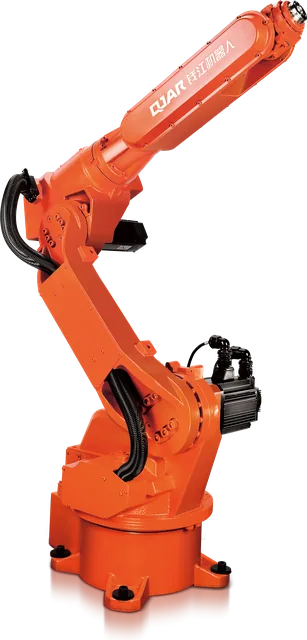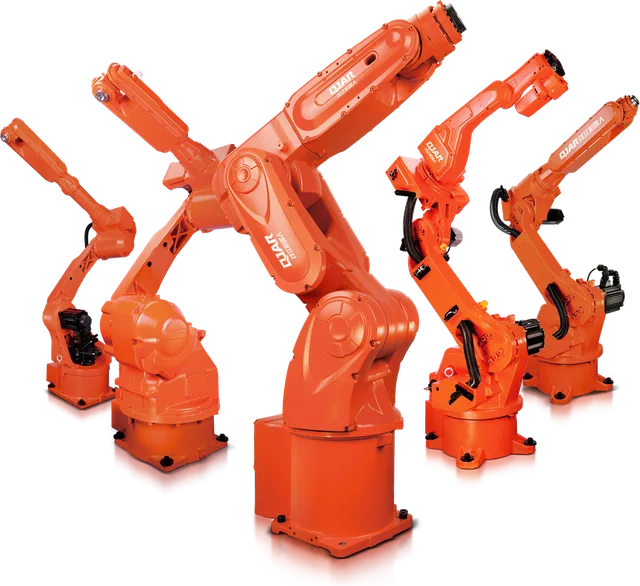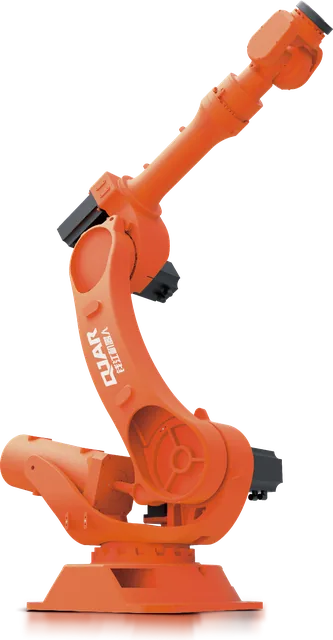
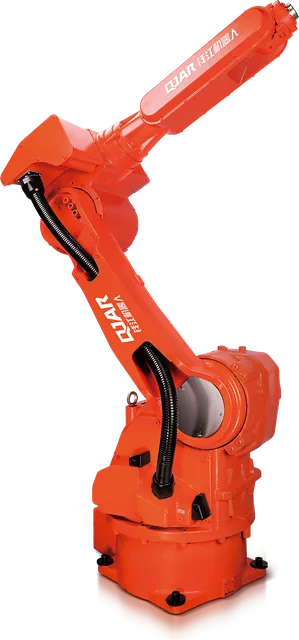
The question usually arrives like this: which is safer, the collaborative robot or the industrial one? The international standard answers differently. For the standard, no robot is safe or unsafe by nature. There is an application, with tool, part and task, that has or has not been designed and validated as safe.
That change of viewpoint settles a large part of the choice. This article shows what the standard calls collaborative, what changes in practice between the two approaches and five questions that decide each case.
What the standard calls collaborative
ISO 10218 is the safety standard for industrial robots. Part 1 covers the robot and Part 2 covers the application and the cell. In the 2025 edition, the terms collaborative robot and collaborative operation no longer appear. Collaborative application is used instead because, in the words of A3, the US association whose staff acted as secretary of the working group behind the revision, only the actual use of the robot can be designed, tested and confirmed as collaborative.
Most of the safety requirements for these applications, previously gathered in the technical specification ISO/TS 15066, were incorporated into Part 2 of ISO 10218, because human-robot collaboration depends on the application and not on the robot alone.
ISO/TS 15066 describes four forms of collaborative operation:
- Safety-rated monitored stop. The robot stops and stays stopped, under monitoring, while the person is in the shared space. In the 2025 edition of ISO 10218 the function was renamed monitored standstill and is also used outside collaborative applications.
- Hand guiding. The person leads the arm by hand, through a dedicated device.
- Speed and separation monitoring. Sensors track the distance between person and robot. The robot slows down as the person approaches and stops before contact.
- Power and force limiting. Contact is allowed, within force and pressure limits defined per body region.
What the market calls a collaborative robot is, in general, an arm designed for the fourth form: light, with rounded edges and force monitoring.
What changes in practice
| Criterion | Industrial robot in a guarded cell | Collaborative application |
|---|---|---|
| How risk is reduced | Person and robot separated by guards and interlocks | Force and pressure limits, reduced speed and sensors, with the person in the same space |
| Payload and reach | From light tools to heavy loads: 4 kg to 800 kg and up to 3,159 mm in the QJAR line | Light loads, with arms of shorter reach |
| Speed | Full speed throughout the cycle | Limited while a person is within reach |
| Floor space | Arm plus the guarded area | Smaller, when the risk assessment allows working without an enclosure |
| Typical processes | Arc welding, palletizing, painting, machine tending | Assisted assembly, inspection, light feeding, screwdriving |
| Programming | Teach pendant and simulation outside the cell | Teach pendant and hand guiding of the arm |
| Relocation | Fixed cell, designed for the process | Simpler, with a new risk assessment at each move |
Neither column is better at everything. Each one solves a type of task.
When the industrial robot is the choice
- High payload. A palletizing gripper with bags or a spot welding gun adds up to tens of kilograms at the wrist.
- Short cycle and high volume. The gain comes from full speed over two or three shifts.
- A process that is hazardous by nature. Electric arc, paint mist, hot parts and sharp edges call for separation, whatever the arm. This is the case of robotic welding.
- Fine repeatability with long reach. In the QJAR line, the welding and handling models work between ±0.03 mm and ±0.08 mm, with up to 2,014 mm of reach.
The figures for each model are in the industrial robot guide.
When the collaborative application makes sense
- The person needs to be there. Assembly in which the operator positions one component while the robot holds or fastens another.
- Light parts and tools, without sharp edges. A force limit only protects if the tool is also safe on contact.
- No room for safeguards. Stations in existing lines, between two machines.
- Small batches with frequent changeover. Hand guiding speeds up point teaching.
- Moderate rate. The cycle time can accommodate the limited speed.
The middle ground: industrial robot with presence sensing
Between the closed cell and the contact-based collaborative application there is an intermediate solution. An industrial robot runs at full speed while the area is clear. Safety scanners track the approach: in a first zone the robot reduces speed, in the next zone it stops and remains in monitored standstill. When the person leaves, the cycle resumes.
This is speed and separation monitoring applied to an industrial arm. It suits loading stations that the operator enters a few times per hour. The distances depend on the stopping time of the robot, as with light curtains, and come from calculation.
Three typical situations
- Welding a steel structure. The process involves arc, spatter and fumes. The torch and the hot part require separation, whatever the arm. The solution is an industrial robot in a guarded cell, with parts loaded from outside.
- Assembly with visual check. The operator fits a component, the robot applies a repetitive tightening operation and presents the part for inspection. Person and robot alternate at the same point several times per minute, with a light tool and no sharp edges. This is collaborative application territory.
- Tending a machine. The robot works alone almost all the time, and the operator comes in from time to time to replenish parts. An industrial robot with presence sensing keeps full speed while the area is clear and stops when someone enters.
Safety: both go through NR-12 in Brazil
In Brazil, item 12.1.12 of NR-12 considers compliant the robot systems that follow ISO 10218-1, ISO 10218-2 and ISO/TS 15066. All three standards are in the same item. There is no lighter path for collaborative setups.
Three frequent misconceptions:
- "Collaborative means no risk assessment." It does not. The assessment considers robot, tool, part and task.
- "An industrial robot needs a fence all around." The regulation requires safety systems in hazard zones, which may combine fixed guards, movable guards and sensing devices.
- "No fence, no documentation." A collaborative application requires validation of the force and pressure limits, which is engineering and measurement work.
The items of the regulation are in NR-12 for robot cells.
Cost: compare the cell, not the arm
A collaborative application can reduce spending on physical guards. An industrial cell delivers more parts per hour. What decides is the cost per part over the years, with the plant's real shifts.
The structure of the calculation, with the ten blocks of the investment and the payback formula, is in industrial robot cost.
How to decide in five questions
- Does the task require a person in the same space during the cycle? If not, separation is the most productive path.
- What is the total payload at the wrist, including the tool? The answer can rule out one of the options from the start.
- What cycle time is required? Compare it with the speed allowed when a person is present.
- Are the process or the part hazardous in themselves? Heat, arc, paint, edges and mass define the safeguarding.
- How often does the task change product or place? Frequent change favours solutions that are simpler to reconfigure.
In palletizing, for example, the five answers usually point to the industrial robot when load and rate are high, and leave room for the collaborative alternative with light boxes and low rate. The criteria are in the palletizing robot guide.
Frequently asked questions
What is the difference between a collaborative robot and an industrial robot?
An industrial robot runs at full speed inside a guarded area, separated from people. In a collaborative application, person and robot share the space, and risk is reduced by limits on force, pressure and speed. The practical difference shows up in payload, cycle time and type of safeguarding.
Does a collaborative robot do away with fencing?
Not always. The decision comes from the risk assessment of the whole application: robot, tool, part and task. A sharp tool, a heavy part or a process involving heat may require safeguards even with an arm designed for collaboration.
Is a collaborative robot slower than an industrial robot?
While a person is within reach, yes: speed is limited so that any contact stays within the force and pressure limits. That is why short-cycle, high-volume tasks are usually solved with an industrial robot in a guarded cell.
Can an industrial robot be used without a fence?
It is possible in projects that use presence-sensing devices, such as safety scanners, with speed and separation monitoring: the robot slows down and stops as the person approaches. Feasibility depends on the risk assessment and on safety distances.
What is a collaborative application according to ISO 10218?
It is the actual use of a robot in which people and robot occupy the same space during the task. The 2025 edition of ISO 10218 no longer uses the term collaborative robot because safety depends on the complete application, not on the arm alone.
Talk to BR Robotics
BR Robotics integrates in Brazil the QJAR industrial robots, with 4 and 6 axes, from the EVST line, which also includes collaborative robots. The recommendation starts from your process, not from the catalogue. Send the task, the part and the target cycle time. Talk to BR Robotics, see the robot range or the manufacturer's datasheets.
Sources
- A3 (Association for Advancing Automation), Updated ISO 10218: Answers to Frequently Asked Questions
- ISO 10218-2:2025, Robotics: Safety requirements, Part 2: Industrial robot applications and robot cells
- ISO/TS 15066:2016, Robots and robotic devices: Collaborative robots
- NR-12, Safety at Work in Machinery and Equipment, item 12.1.12 (in Portuguese)
- EVST Brasil, QJAR line datasheets