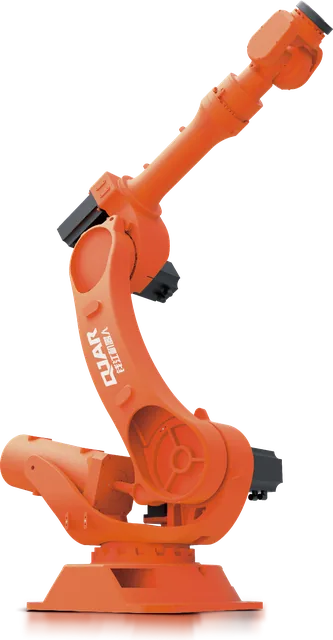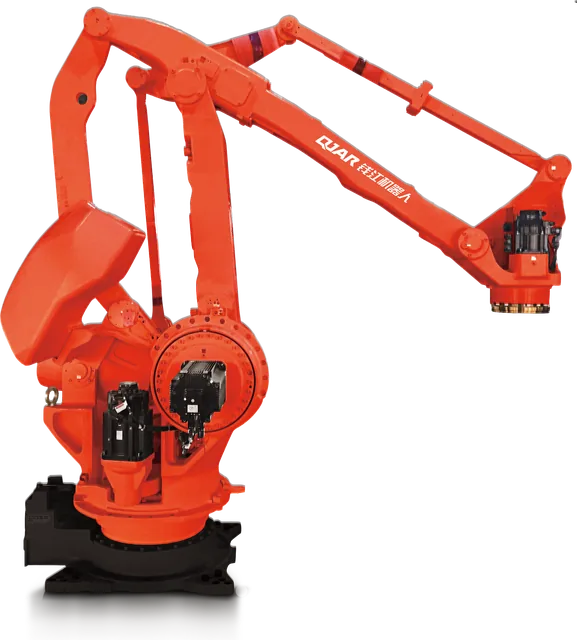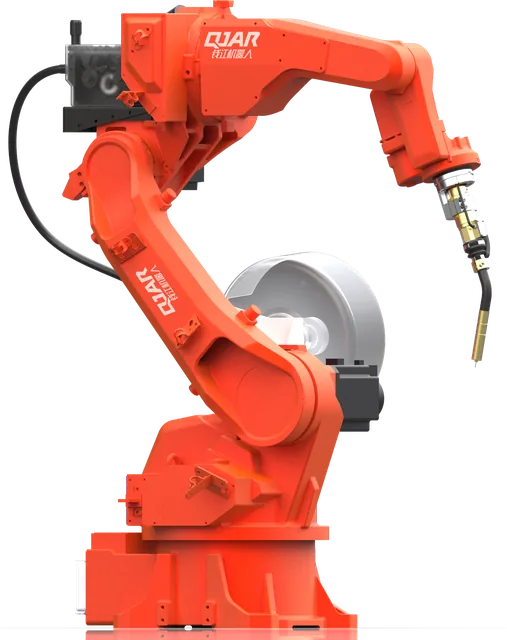
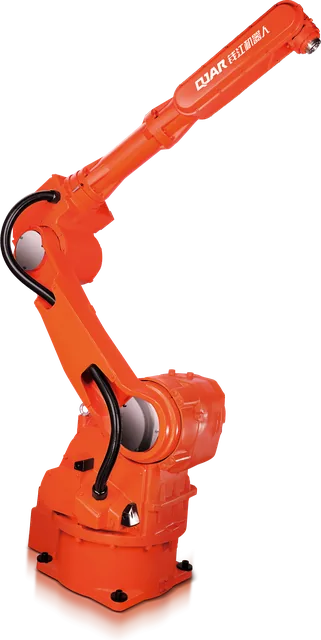
The manufacturer sells an arm. The plant needs welded parts, built pallets or tended machines, at the agreed cycle and with documented safety. Between one and the other there is an engineering project, and the one who carries it out is the robot integrator.
The international safety standard recognizes this division. ISO 10218-1 is addressed to those who manufacture the robot. ISO 10218-2 is addressed to those who integrate robot applications and robot cells. This article shows what the integrator delivers, what it is responsible for and how to choose the right industrial automation company for the project.
What a robot integrator is
Three roles are often confused:
| Role | What it delivers | Where it ends |
|---|---|---|
| Manufacturer | Robot, controller and product documentation | At the robot as partly completed machinery |
| Distributor | Sale and logistics of the equipment | At delivery of the equipment |
| Integrator | Cell designed, installed and producing | At the result: cycle, quality and safety |
One group may play more than one role. What matters to the buyer is knowing who answers for the result of the cell.
What the integrator delivers, stage by stage
| Stage | What you receive |
|---|---|
| 1. Feasibility study | An opinion on the task: whether it can be automated, with which cycle and gain assumptions |
| 2. Concept and layout | Cell arrangement, recommended robot model, flow of parts and people |
| 3. Simulation | Reach, interferences and cycle time checked on the 3D model |
| 4. Design | Mechanical, electrical, safety and software |
| 5. Build and assembly | Cell assembled and tested before it goes to the line |
| 6. Acceptance test | Cell producing real parts before delivery |
| 7. Installation and commissioning | Cell connected to utilities and to the line flow |
| 8. Site acceptance | Cycle and quality proven in production |
| 9. Training | Operation, programming and maintenance |
| 10. Support | Service, parts and adjustments after start-up |
The list is a tool for reading proposals. A missing stage does not disappear from the project: it moves to the customer, with the corresponding cost and risk.
When to call the integrator
The best moment is before buying the robot. Model selection depends on the tool, the fixture and the layout, and those three items only exist after the application has been studied. Buying the arm first tends to fix a payload or reach class that the project then has to work around.
It pays to involve the integrator even earlier when the product is under development. Small design decisions, such as access to a weld joint or the gripping face of a box, change the cost of the whole cell. At that stage they cost a drawing revision. Later, they cost a fixture.
Full or partial supply
There are two contract formats, and both work when the boundary is written down.
- Full supply. The integrator answers for everything, from engineering to start-up, and the plant receives the cell in production. It is the recommended format for a company's first robot cell.
- Partial supply. The plant takes on parts of the scope, such as the civil base, utilities, fixtures or conveyors. It makes sense when there is an in-house engineering and maintenance team.
In partial supply, the critical point is the interface. Whoever supplies the fixture answers for part position. Whoever supplies the conveyor answers for the part-present signal. And who answers for the safety of the whole has to be defined before the first purchase.
Responsibilities that cannot be delegated to the catalogue
Safety
Brazil's NR-12 requires hazard zones to have safety systems and those systems to be under the technical responsibility of a legally qualified professional (item 12.5.2). In practice, the engineer in charge issues the Technical Responsibility Annotation (ART), provided for in Law No. 6,496/1977, for the safety design of the cell.
The risk assessment is done for the application, with the real tool, part and tasks. No robot arrives with it ready, because it depends on what the robot is going to do. The items that weigh most are in NR-12 for robot cells.
Documentation and training
Item 12.13 of NR-12 requires a manual in Brazilian Portuguese, with safety information for all phases of use. Item 12.16 requires training before the worker takes up the role, covering operation, maintenance and inspection. In a robot cell, these two items are project deliverables and have to be in the scope.
How to choose: eight criteria
| Criterion | What to ask | Warning sign |
|---|---|---|
| 1. Process knowledge | Does the team discuss the joint, the pallet pattern or the cycle before talking about the robot? | A conversation that starts and ends in the catalogue |
| 2. Study before price | Does the proposal come with layout, reach and estimated cycle? | A fixed price without seeing the part |
| 3. Safety scope | Who does the risk assessment and the safety design? | Safety "left to the customer", with no definition |
| 4. Acceptance criteria | Are cycle, quality and output per shift in writing? | Subjective acceptance |
| 5. Relationship with the manufacturer | Is there direct access to parts, support and factory training? | Dependence on third parties for every question |
| 6. Support after start-up | How does service work, on site and remote? | No plan for the production period |
| 7. Handover | Do programs, backups and documentation stay with the customer? | Closed program, no copy |
| 8. Proximity | How long does it take someone to reach the plant? | Long travel for any adjustment |
The first four criteria decide whether the cell will work. The last four decide how much it will cost over the years, the subject of industrial robot cost.
Common mistakes when contracting
- Choosing the lowest price among proposals with different scopes.
- Defining the robot before defining the tool and the fixture.
- Leaving safety until after installation.
- Accepting the cell without written criteria for cycle and quality.
- Training only the operator and finding out, at the first stoppage, that nobody in maintenance knows the cell.
What to send in the request for proposal
- Drawings or 3D models of the parts.
- Description of the present process, with times.
- Annual volume, batch size and number of shifts.
- Target cycle time and expected result.
- Tolerances and quality criteria.
- Layout of the area and utilities available.
- Constraints: deadline, possible shutdowns, internal standards.
- Who, in the plant, will operate and maintain the cell.
For specific applications there are more detailed lists in the guides on the robotic welding cell and the palletizing robot.
A nearby integrator makes a difference
Robotics projects do not end at start-up. There is a production ramp, new parts, program adjustments and maintenance. An integrator a few hours from the plant responds faster and trains the team more often.
BR Robotics is based in Caçapava, São Paulo state, in the Paraíba Valley, on the Dutra highway between São José dos Campos and Taubaté, on the corridor that links São Paulo to Rio de Janeiro.
BR Robotics
BR Robotics integrates QJAR robots, from the EVST line, in Brazil. It sizes the robot and the cell for the process and integrates the system into the line. The line covers 4 kg to 800 kg of payload, with 4-axis and 6-axis robots for arc welding, palletizing, painting and handling, plus positioners, track and welding power source from the same manufacturer.
More about the company in About BR Robotics. To understand the figures of each model before the conversation, see the industrial robot guide.
Frequently asked questions
What does a robot integrator do?
It turns a robot into a cell that produces. The integrator studies the process, defines the robot and the layout, designs the tool, fixtures and safety, programs, installs, commissions, trains the team and provides support after start-up.
What is the difference between the robot manufacturer and the integrator?
The manufacturer delivers the robot, which the safety standard treats as partly completed machinery. The integrator is responsible for the application: robot, tool, part, fixtures and safeguards working together. ISO 10218-1 is addressed to the manufacturer and ISO 10218-2 to whoever integrates.
Who is responsible for NR-12 compliance of a robot cell in Brazil?
The integrator is responsible for the design of the application and for the safety systems, which NR-12 requires to be under the technical responsibility of a legally qualified professional. The employer is responsible for protective measures, maintenance and training of those who operate and maintain the cell.
What should I send to request a proposal from an integrator?
Drawings or 3D models of the parts, the present process, annual volume, target cycle time, number of shifts, layout of the area and utilities available. The more complete the request, the more comparable the proposals.
Is it worth choosing an integrator close to the plant?
Proximity shortens response time for installation, adjustments and maintenance, and makes team training easier. It matters, but it comes after process competence and a well-defined safety scope.
Talk to BR Robotics
Send the process, the part and the target cycle time. The reply comes with the recommended model, the cell layout and the quote. Talk to BR Robotics or see the robot line.
Sources
- A3 (Association for Advancing Automation), Updated ISO 10218: Answers to Frequently Asked Questions
- ISO 10218-2:2025, Robotics: Safety requirements, Part 2: Industrial robot applications and robot cells
- NR-12, Safety at Work in Machinery and Equipment, items 12.5.2, 12.13 and 12.16 (in Portuguese)
- Law No. 6,496/1977, Technical Responsibility Annotation (Brazilian Presidency, in Portuguese)
- EVST Brasil, QJAR robot and peripherals line